news
RESPs are accounts that have other accounts inside of them…kind of like Russian nesting dolls. And you can’t just take the money out and hope for the best…well, you can, but it’s likely to result in the government getting money that could have been yours, if only you knew how to get at it.
For many of us, the decisions we make about what to spend our money on are our most direct participation in the world of finance. Control over what we buy can sometimes feel like the only control we have, even if that control is limited by how much income we have and what the basic necessities of life cost.
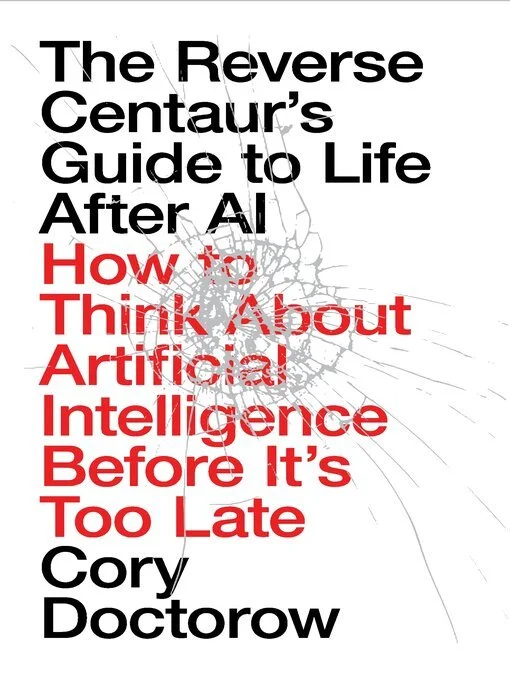
The Reverse Centaur’s Guide to Life After AI, by Cory Doctorow, is an easy to read, deeply researched, and by turns hilarious and infuriating book that explains exactly how we got here, how the AI bubble was built, for whom, who will walk away rich and happy when it pops, and what regular people will be left with when it’s over.

Life expectancy is math. It’s a number that comes from how long other people have lived in the past, and it describes how many more years you might live from today. It’s important for financial planning, but it’s even more important for changing the world.

If you own a corporation, you need to work with an Advice Only Planner who has the expertise and interest to give you the best advice possible.

Credit histories and scores seem like a logical and inevitable part of our lives, and knowing how to build and improve your score is critical to your financial wellbeing.
But--and this is IMPORTANT--just because it’s critical doesn’t mean it’s fair or that it says anything important at all about you.

Modern retirement is barely two generations old, and it’s incredibly hard. Why? Well, for one thing, it’s expensive. Lots of people can’t afford it. And even the people who can afford it have a hard time with the complexity, psychology, and guilt that the Freedom 55 advertising campaign didn’t talk about. We can make it easier for ourselves by making it easier for everyone.

Season Two of Ready…Set…Money is coming soon, and we’re looking at our money as a system - how everything about your finances touches everything else. We’ll zoom in on smaller, individual systems and zoom out to look at bigger systems that feel invisible but impact us every day.
Watch for Season Two to drop in August.


You can move your registered account anywhere you want, anytime you want. You’re not withdrawing from one institution and re-contributing the money at another one. Instead, you’re moving the entire account, registration and all, to an institution you’ve decided suits you better.


Over time, your investments will perform however they perform. Inflation will do its thing to your expenses. Your income will grow (or not). You’ll save more or less than you thought you’d be able to. The interest on your debt will change, and you’ll pay off more or less than we assumed. Tax policy will definitely change to incentivize different behaviours.
This, friends, is the reason it’s called “financial planning”: it’s an iterative process, rather than a one-and-done product.

If your basic needs are being met, and you have more than you need to get by, you have the luxury of deciding what to do with that extra money.
This is important, because–as the saying goes–you can have anything, but you can’t have everything. You have to decide what you want, and you have to decide what you’re willing (or not willing) to do to get it.

There’s not a lot that I can tell you with utter certainty, but here’s something I know for sure: things will go wrong. Here’s what to do if you, like me, don’t own a time machine and can’t travel to the past to do all the “right” things ahead of time.

In conversation with Kent Tilley from K4 Financial on banks, monopolies, and financial planning.

Whether you’re just starting out, or you’ve been investing for a long time, it’s important to know how much you’re paying to invest, and decide if it’s worth it.
If you are eligible for the Disability Tax Credit, you can get up to $70,000 from the federal government by opening and contributing to a Registered Disability Savings Plan, and if you have low or no income, you can get up to $20,000 without having to contribute a single penny, just by opening an account.

If you’re thinking of getting started with financial planning, and are feeling intimidated by what you think you need to know before you even begin, here’s a step by step guide to getting organized.

It can be intimidating and pretty scary to buy a home for the first time, not to mention pants-wettingly expensive. Squeezing every last tax-free dollar out of registered programs like the First Home Savings Account is worth doing. If you have extra money that you can afford to save for your first home, or even if you don’t own a home and never will, this episode is for you.

A Defined Contribution Pension Plan is a mash up between a Defined Benefit Pension Plan and an investment account. Very little about it is guaranteed, so knowing how it works (and how it doesn’t), is the best way to get the most out of it.

There are plenty of tricky little financial planning traps for US citizens living in Canada, and they change often enough to be difficult to stay on top of, if you ever get on top of them in the first place. I’m not on top of them and never will be.
If you’re a US citizen, please for the love of all that’s holy find and work with a financial planner who knows cross-border planning in and out. You don’t want them learning on the job if you’re the job they’re learning on; the consequences of getting it wrong are too high.
Maybe you’re tired of your labour being exploited for someone else’s profit, or how toxic your workplace is, or being evaluated for the quantity of time you spend in the office instead of the quality of the work you do.
If you’re thinking of starting what the kids these days call a side hustle, or what people at my advanced stage of life call “a business”, this episode is for you.

A good emergency fund, Martin says, is one you can access within a short time and without withdrawal penalties. “A great emergency fund is money that you can access at any time, even in the middle of the night in Nowheresville. Earning interest is fine, but access trumps interest.”

Nobody wants to talk about insurance, at least, not with the people who sell it hard, and man - I get it. But if you depend on your ability to work to pay the bills, or if other people depend on you for their food and shelter, you have to at least think about it.
Today, we’re taking five minutes to think about life and disability insurance that you own yourself, as opposed to the group policy you might be part of through work).

I know no one else is quite as excited about tax time as I am (and yes, I am hosting at least two tax prep parties with friends this year), but I hope this helps you give your future self the gift of a slightly less bad (or maybe even a good?) tax filing season.

Coming soon! Ready Set Money is a guide to knowing what’s important and where to find it. It’s short, sweet, and actionable, so that whether you’re getting ready to work with a financial planner, to do your own planning, or just want to get organized so you can stop thinking about it already, you’ve got a friend in your ear to help you.

The thing I want most for you in the coming year.

If you’re in a position to put money away for the future, knowing the basics of Tax Free Savings Accounts and Registered Retirement Savings Plan can help you decide what kind of account makes the most sense…for you, specifically.
A decent way to understand how the government thinks about common law relationships vs. marriage is that moving in together is mostly–but not always only–about income and getting married is–mostly, but not always only–about property.